
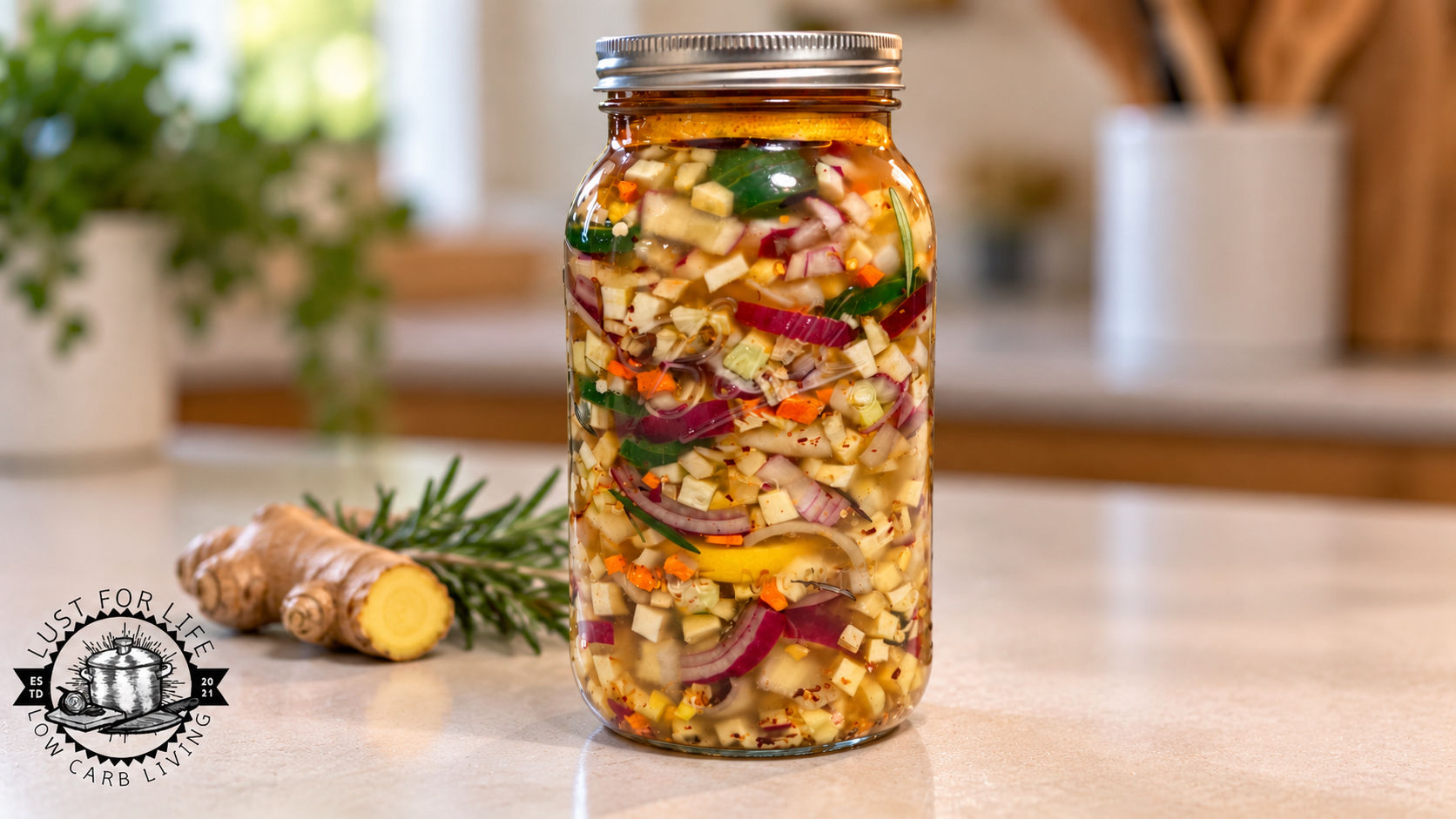
Medicinal Cooking: Fire Cider, The Power Behind the Punch
Exploring everyday ingredients that nourish the body.
As I’ve continued on my health journey exploring the benefits of herbs and medicinal cooking, I’ve learned so much along the way. While I’m certainly not an expert, I’ve discovered some simple things that have made a real difference for me and my family, and I’d love to share them with you.
Today, I want to talk about Fire Cider, one of my favorite ways to support my body, especially during cold and flu season.
I first heard about Fire Cider from my oldest daughter, and then shortly afterward, I heard about it again during an herbal remedies seminar. It almost sounded too good to be true. Could everyday ingredients really make that much of a difference in supporting the body during cold and flu season?
So I did a ton of research and looked at many different recipes. Eventually, I chose to merge a few of them together to create my own personal recipe. I use fresh, local ingredients whenever possible, especially when it comes to the honey.
Of course, I can only share my own experience. Last September, I started drinking about one tablespoon of Fire Cider a day and continued through the winter and into spring. The last time I personally had cold symptoms was the August before I started, so it’s now been over a year.
With cold and flu season right around the corner again, it’s time for me to start another batch.
Fire Cider is an oxymel, a traditional preparation that combines vinegar and honey with herbs, roots, fruits, vegetables, and spices.
Vinegar-and-honey herbal preparations have been used for centuries, but the Fire Cider we know today was popularized by herbalist Rosemary Gladstar in the late 1970s and early 1980s. Since then, it has become a popular folk preparation throughout the herbal community.

My Fire Cider starts with everyday ingredients like apple cider vinegar, garlic, onions, ginger, oranges, jalapeños, horseradish root, rosemary, turmeric, black pepper, lemon and local honey. Each ingredient brings something a little different to the jar, from the unmistakable bite of horseradish and hot peppers to the brightness of citrus and the sweetness of honey.
While the ingredients are easy to find, making Fire Cider does require one important thing: time.
I allow mine to infuse for about 6–8 weeks before straining it and adding the honey. You really don’t want to rush the process. Giving everything time to infuse allows the vinegar to extract the flavors and plant compounds from all those fresh ingredients.

That’s why now is such a great time to make a batch. Start it in early fall and it will be ready as we head into cold and flu season.
There isn’t strong scientific evidence showing that Fire Cider itself can prevent or treat a cold or the flu. It’s a traditional folk preparation, not medicine.
When you look at the individual ingredients, you begin to see where Fire Cider gets its punch.
Garlic and onions contain sulfur compounds and antioxidants. Ginger has been studied for its digestive and anti-inflammatory properties, while turmeric contains curcumin, the plant compound responsible for much of the research surrounding turmeric. Hot peppers contain capsaicin and can create that familiar warming, nose-clearing sensation. Horseradish has that same unmistakable sinus-opening kick.
Citrus brings vitamin C and other plant compounds to the mix, while rosemary contains its own naturally occurring antioxidants. Honey helps balance all that acidity and heat while also being traditionally used to soothe irritated throats and coughs.

Apple cider vinegar provides the acidic base that pulls everything together and extracts flavors and plant compounds from the ingredients as they infuse.
It’s a great example of something I keep discovering through medicinal cooking: sometimes the most interesting ingredients aren’t exotic at all. They’re foods and spices many of us already have sitting in our kitchens.
Fire Cider can be pretty potent though. The combination of apple cider vinegar, hot peppers, ginger, garlic, and horseradish can cause stomach irritation, heartburn, or reflux for some people, particularly when taken straight or in larger amounts.
Because vinegar is acidic, frequently drinking it undiluted can also be hard on tooth enamel.
Fortunately, there are some easy ways to make it a little gentler:
Mix 1 tablespoon into a mug of warm water. You can add a little extra honey to cut the spice even more.
Mix 1 tablespoon with 2–4 ounces of water or juice. Apple, orange, or cranberry juice can help mask the stronger flavor.
Use a straw when drinking diluted Fire Cider to reduce contact with your teeth.
Drink it during or after a meal if it tends to bother your stomach.
Rinse your mouth with plain water afterward to help protect your enamel.

One of my favorite things about Fire Cider is how easy it is to incorporate into everyday meals, even if your family isn’t too crazy about drinking the spicy stuff.
For example:
-Use it as the acid in a homemade vinaigrette.
-Whisk it with olive oil and herbs to make a marinade for chicken or tofu.
-Stir a splash into hot chicken or vegetable broth.
-Sprinkle a little over roasted vegetables or rice bowls.
One of my favorite discoveries actually came after I strained my Fire Cider.
Instead of throwing away all those beautiful vegetables, roots, herbs, and spices that had been infusing for weeks, I pressed out as much liquid as I could, then put them into my dehydrator and dried them completely.
Then I ground them into a Fire Cider seasoning.

I used some of that seasoning to make a Fire Cider butter, tossed it with pasta, and ended up with a delicious side dish from ingredients that otherwise would have been discarded.
That’s exactly the kind of thing I love about medicinal cooking — finding different ways to use simple ingredients and getting as much out of them as possible.
Try It This Week:
Review the recipe, gather your ingredients and supplies, and start a batch for yourself and your family.
It only takes a little prep work in the beginning. Then you can tuck the jar away and let time do the rest.
If you start now, your Fire Cider will be ready just in time for the colder months ahead.
After all, one of the best parts of good food is sharing it, and we can all learn from one another.
This journey is teaching me that lasting change doesn’t happen overnight. It happens one ingredient, one recipe, and one meal at a time.
I hope you’ll join me for the next installment of Medicinal Cooking.

Fire Cider Recipe
I take 1–3 teaspoons daily during cold and flu season — what I jokingly call “cootie season.” I personally increase that to about 1 tablespoon a couple times a day if I’m feeling under the weather. Fire Cider is a traditional preparation, not a treatment or preventative for colds or flu.
2 TB fresh Turmeric, peeled and chopped
1/2c Ginger, peeled and chopped
1/2c Horseradish Root, peeled and chopped
1/2 med Yellow Onion, chopped
1/2 med Red Onion, chopped
10 Garlic cloves, peeled and roughly chopped
1 Jalapeño, deseeded and sliced
1 dried Cayenne Pepper, or 1/2 TB crushed Red Pepper
Few sprigs of fresh Rosemary
2 tsp cracked Black Pepper
1-2 slices thick Lemon
1-2 slices thick Oranges
Unpasteurized Apple Cider Vinegar enough to cover all ingredients (with the Mother if you can find it)
Add all the ingredients above to a sterilized 32-ounce mason jar. Double the recipe for a 64-ounce jar.
Cover all ingredients with the apple cider vinegar to the very tippy top.
Cover with parchment paper to prevent vinegar contact with metal lid unless using a plastic lid. Let it sit for 6-8 weeks or so and shake daily. After 6-8 weeks strain it out and you can add honey to taste.
*For 1/2 gallon jar I use 2 cups of honey. Yields 5 8 ouncebottles. Best stored in Amber jars.

Comments